
Designing for Life: Aging in Place Without Sacrificing Style
As we grow older, our needs shift—but that doesn’t mean our homes have to feel clinical or cold. Aging-in-place design has become one of the most thoughtful approaches to interior design, especially here in California, where wellness, longevity, and lifestyle intersect.
Whether you’re planning for yourself or supporting a loved one, the right design choices can create a home that’s safe, stylish, and adaptable without sacrificing warmth or personality.
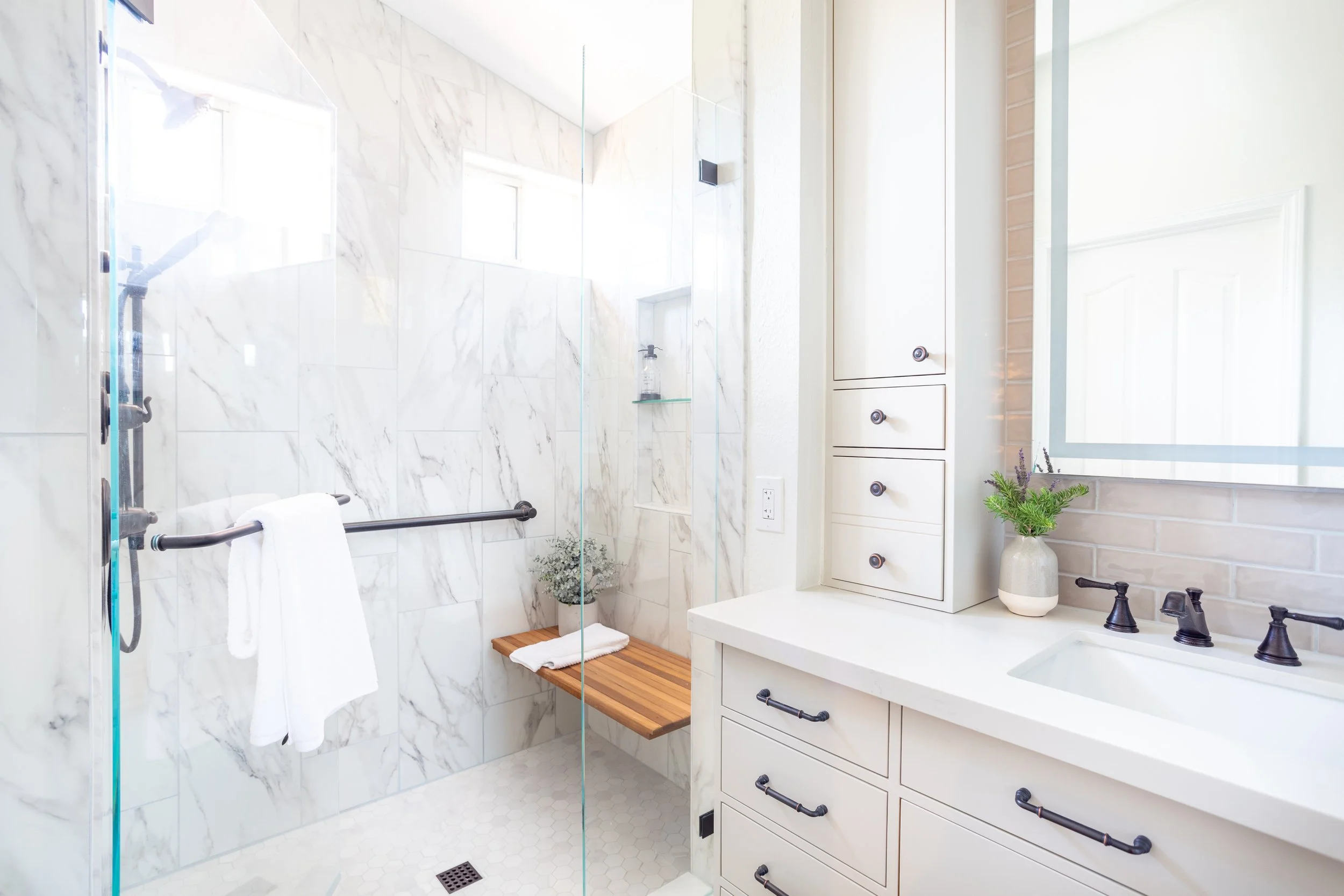
Aging-in-Place Isn’t Just for “Later”
Aging-in-place design isn’t only for older adults. Everyone benefits from features like good lighting, curbless showers, and wider walkways. Life can be unpredictable, with unexpected surgeries, injuries, or even hosting a guest on crutches, and universal design helps homes respond with ease.
At Designology Studio, we believe your home should grow with you. That’s why we often plan for future needs before they’re required, like adding blocking in bathroom walls so grab bars can be installed later without major renovations. Thoughtful planning like this is both cost-effective and life-enhancing.
1. Prioritize Flow, Accessibility & Entry Points
Flow and accessibility don’t start once you’re inside; they begin at the front door. Expanding pathways and doorframes, minimizing level changes, and creating clear, unobstructed circulation make navigating your home easier and safer for everyone.
Thoughtful entryway design plays a big role here. No-step or low-threshold entries, lever or smart locks, covered porches, and well-placed exterior lighting improve safety and comfort before you even step inside. These features also make everyday moments like carrying groceries, welcoming guests, or heading out for a walk feel more effortless.
Inside the home, we aim for wide, smooth circulation paths, minimize obstructions, and use flooring transitions that reduce trip hazards, creating a seamless flow from room to room.
2. Use Layers of Lighting for Safety and Ambiance
Once circulation is addressed, lighting becomes the next essential layer. Good lighting supports both visibility and mood, helping homes feel calm, comfortable, and easy to navigate at any time of day.
We layer general lighting (recessed and overhead), task lighting (under-cabinet and pendant lights), and accent lighting (sconces and chandeliers) to eliminate shadows and enhance clarity. Dimmers and smart lighting systems add flexibility and control.
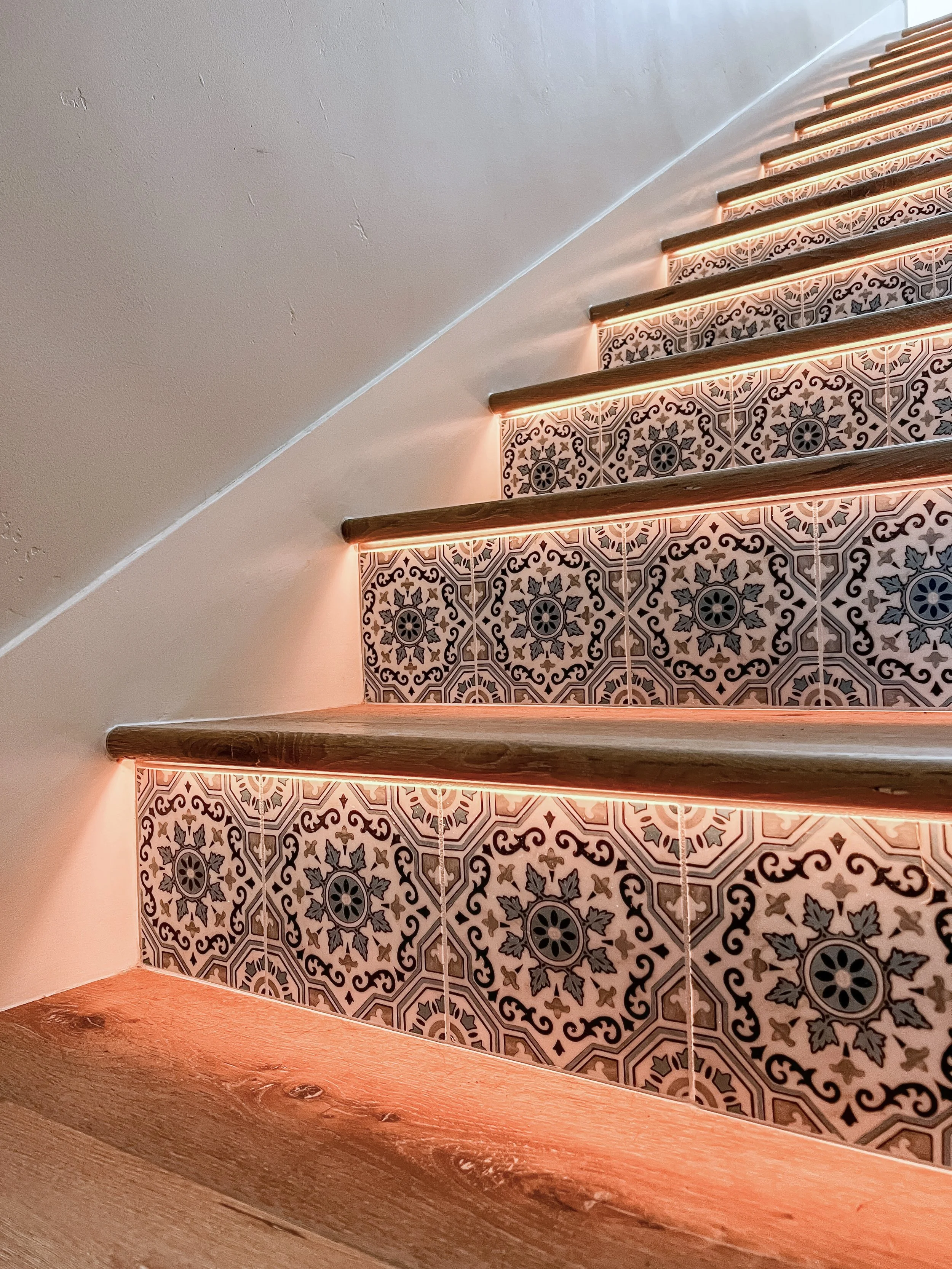
In our Shoreline project, subtle stair tread lighting offers soft, low-level illumination for nighttime navigation. This same approach works beautifully in kitchen and bathroom toe-kicks, providing gentle guidance without disrupting the ambiance.
Pro Tip: Contrast improves visibility. Patterned tile or darker stair nosing helps define edges and depth, making stairs and transitions easier to see.
3. Think Ahead in the Bathroom
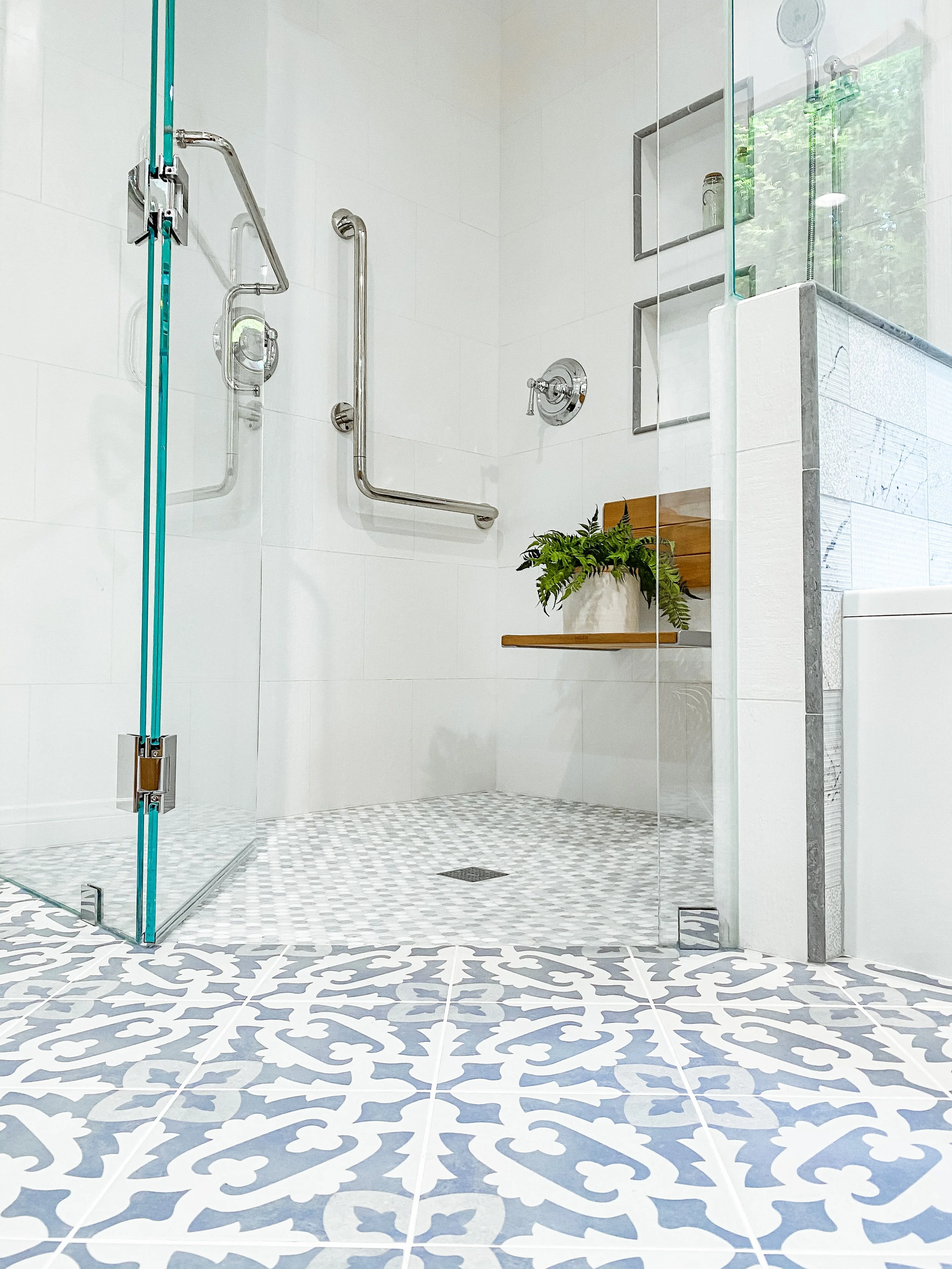
With lighting in place, bathrooms are the next space to consider. They’re one of the highest-risk areas in the home, but with thoughtful planning, they can still feel like spa-like retreats.
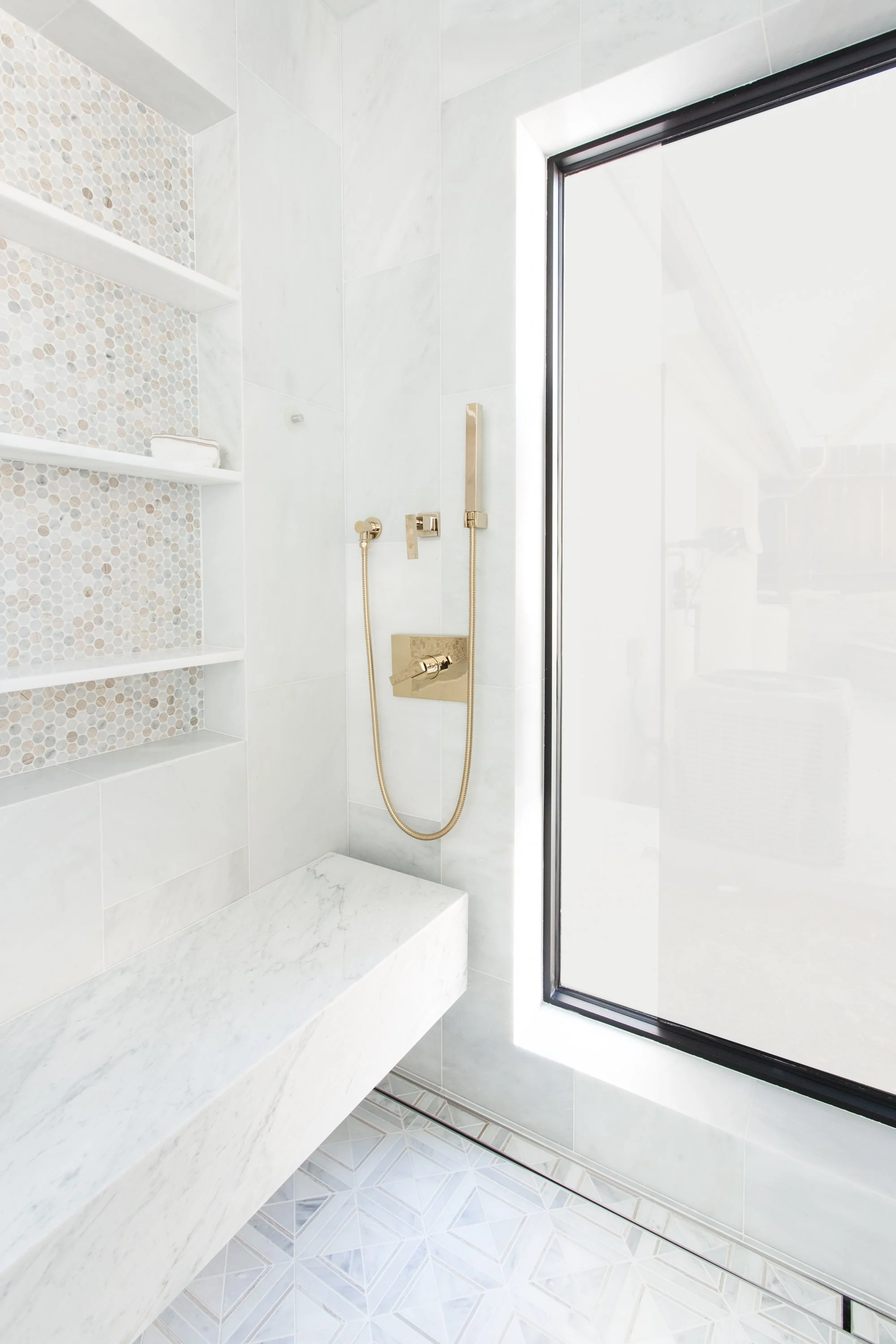
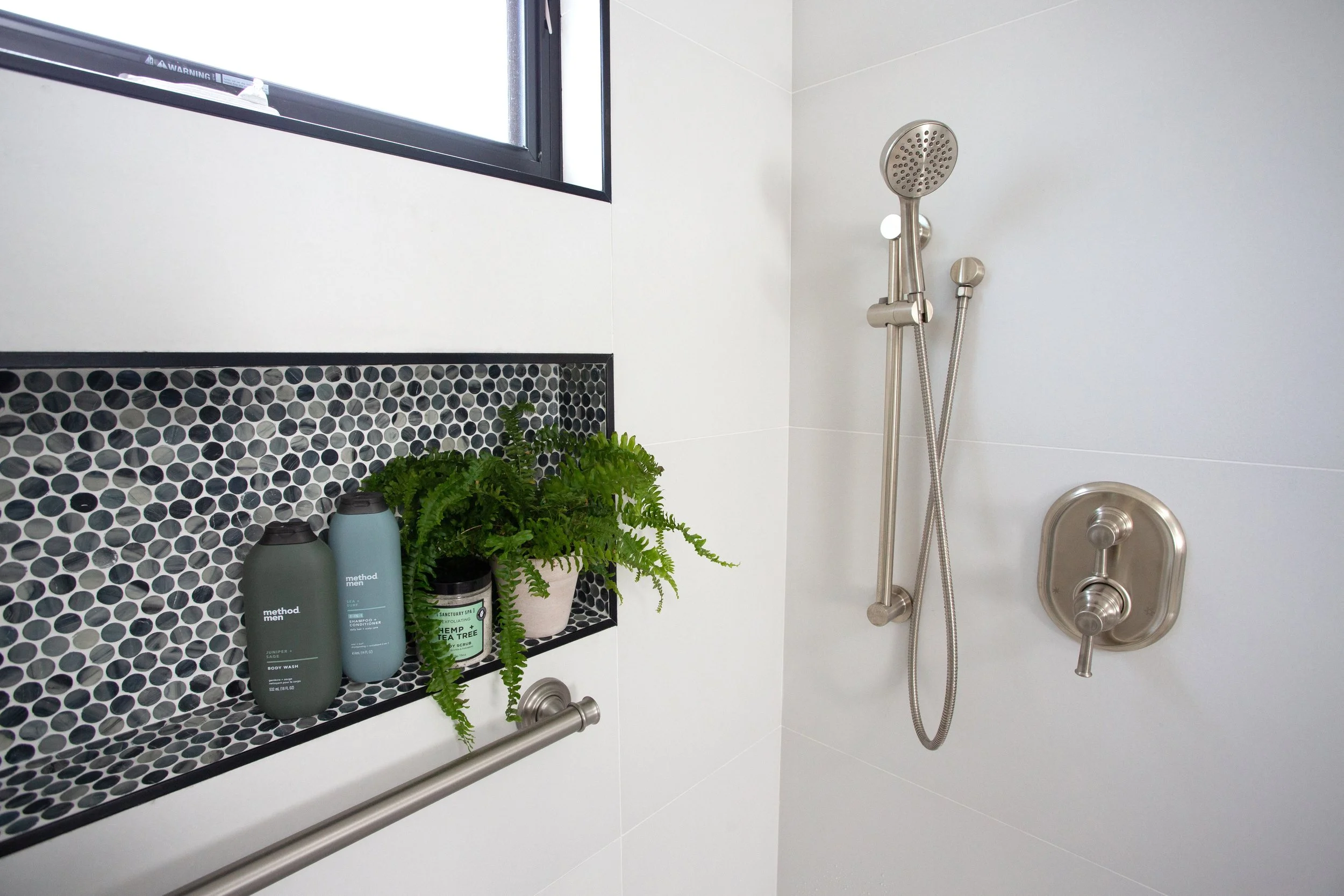
We love walk-in showers with bench seating, slip-resistant tile, lever-style faucets, and well-placed grab bars. Curbless showers create a smooth, barrier-free entry and support accessibility without calling attention to themselves. Using 4” or smaller matte-finish tile also helps with traction and drainage.
Our Santa Ynez and Cathedral Pointe projects showcase how beautifully aging-in-place design can be integrated. Features like mosaic stone tile, built-in or fold-down benches, lever handles, and integrated grab bars provide support while maintaining a refined, cohesive look.
Pro Tip: Grab bars are available in styles and finishes that match plumbing fixtures, allowing them to blend seamlessly into the space.
4. Leverage Contrast & Visual Clarity Throughout the Home
As eyesight changes over time, visual clarity becomes increasingly important. Beyond lighting, we focus on creating contrast between countertops and cabinetry, choosing matte finishes to reduce glare, and clearly defining edges and transitions.
These subtle design decisions improve usability and confidence, while enhancing the overall aesthetic of the home.
5. Choose Hardware That’s Easy to Use
Small details can have a big impact. Lever-style door handles and faucets, along with easy-to-grasp cabinet pulls, support comfort as grip strength changes.
The good news? Today’s options are available in a wide range of styles and finishes, so functionality never comes at the expense of design.
6. Keep Essentials Within Easy Reach
Reducing the need to bend, stretch, or use step stools makes daily routines safer and more comfortable. Pull-out pantry shelves, drawer-base cabinets, and drawer-style microwaves help bring everything within reach.
In our Santa Ynez, Shoreline, and Webster projects, we often incorporate generous drawer storage in kitchens. This approach offers intuitive access to everyday items and keeps spaces feeling streamlined and user-friendly.
7. Choose Comfortable, Supportive Furnishings
Furniture should support real life just as much as the layout does. We look for pieces with firmer cushions, slightly higher seat heights, and solid armrests that make sitting and standing easier—without compromising style.
Durable, cleanable fabrics also help homes feel livable, relaxed, and low-maintenance.
8. Blend Technology with Ease
Smart home features can enhance both convenience and peace of mind when thoughtfully integrated. Lighting controls, thermostats, security systems, and voice-activated features can simplify everyday tasks while blending naturally into the home’s design.
We prioritize technology that supports daily living quietly, never something that feels complicated or intrusive.
Style and Sensibility Can Coexist
Aging-in-place design isn’t about preparing for decline. It’s about living well in the moment while staying mindful of the future. Often, the best time to plan is earlier than expected. Incorporating these ideas during a remodel, new build, or even a cosmetic update is far easier and more cost-effective than retrofitting later.
Even subtle choices made today, like improved lighting, wider pathways, or blocking behind walls, can support you beautifully for years to come. When done thoughtfully, these features don’t stand out; they make your home feel more easy, calm, and intuitive.
Every plan is deeply personal. What works for one household may not be right for another, and that’s exactly how it should be. Our role is to listen first, then design solutions that reflect your lifestyle, aesthetic, and long-term goals.
Thinking about future-proofing your home without sacrificing style?
Based in Ventura County and serving Santa Barbara, Montecito, and surrounding communities, Designology Studio creates homes that support real life beautifully. Let’s explore how small, intentional design choices can make everyday living easier.
Schedule a complimentary Discovery Call with our team